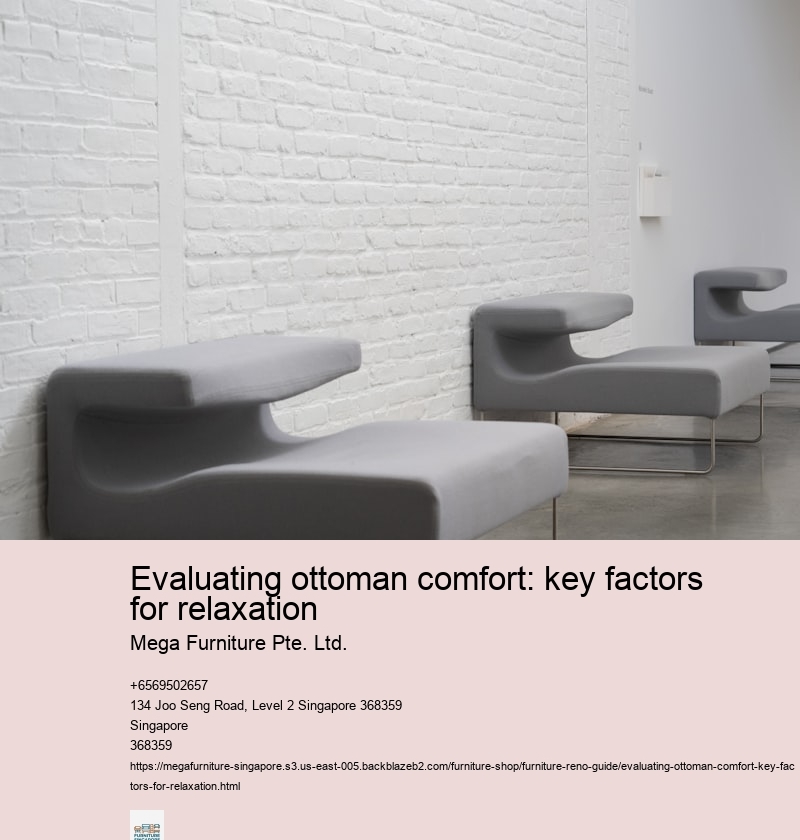
Evaluating ottoman comfort: key factors for relaxation

HDB BTO vs Condo Ottoman Needs

In a 12 sqm HDB master bedroom, the ottoman isn’t just a footrest — it’s often the only place to stash extra bedding, winter coats, or that suitcase you swear you’ll use again. Storage ottomans here tend to be compact, around 40–50cm wide, with lift-top designs that maximise vertical space. Humidity’s the real issue, though; unventilated corridors in older HDB blocks can warp untreated particleboard frames within months. Opt for rubberwood or teak, which hold up better in Singapore’s damp climate, or consider polyester upholstery that resists mould.

Condos, on the other hand, treat ottomans as statement pieces. A 4-room condo living room might feature a 90cm square ottoman in performance velvet or bouclé, doubling as a coffee table with a tray. An ottoman is one of the most under-rated pieces in a small Singapore living room — extra seating when guests come over, footrest during the daily wind-down, sometimes a coffee-table substitute when the room layout demands flexibility. Megafurniture's Ottoman collection covers footrest, square, lift-top storage, and round designs in fabric, leather, faux leather, velvet, and rattan. Lift-top storage variants typically hold 60–80 litres of contents — useful for blankets, board games, or seasonal items.. These larger designs, often priced between $1,200 and $2,400, prioritise aesthetics over storage — think tufted tops and metallic legs. They’re less about practicality and more about tying together a sectional sofa or recliner.

Families in HDB flats usually lean toward multifunctionality; a storage ottoman that doubles as extra seating during CNY gatherings is a lifesaver. Condo dwellers, especially those in Tanah Merah or Eunos, often prioritise cohesion with their existing décor — a neutral ottoman that complements their sectional sofa or a bold piece that anchors the room.

Material choice matters, but so does placement. Bar Stool . In HDB flats, ottomans often get shoved into corners where airflow’s limited; in condos, they’re front and centre, where spills from kopi or wine are the bigger concern. Performance fabrics like Crypton or Sunbrella, which resist stains and moisture, are worth the investment for either scenario.
Material Guide for SG Climate

Singapore’s humidity warps particleboard ottomans within a monsoon season, leaving white salt rings where legs meet flooring. Teak holds up—its natural oils repel termites better than rubberwood or acacia, though all three darken over time in balcony placements. Marine-grade foam won’t sag when your ottoman doubles as impromptu seating during CNY gatherings; standard polyester fill collapses after six months of afternoon thunderstorms seeping through open windows.

Velvet’s a trap in cat households—claws shred the pile, leaving bald patches that collect lint like velcro. Opt for textured linen or Sunbrella performance fabric instead; their tighter weaves hide scratches and resist kopi stains when kids treat the ottoman as a breakfast tray. For balcony units facing east-west sun, powder-coated aluminium frames outlast painted steel, though their industrial look clashes with most BTO living rooms’ Scandi-Jap aesthetic.

Storage ottomans in 4-room flats need ventilation slats—sealed lids grow mouldy within weeks if storing spare blankets or winter wear. Megafurniture’s teak-leg models include hidden gaps behind drawer fronts, a detail often overlooked in cheaper imports. Skip leather in high-humidity zones like Eunos or Punggol; even treated hides develop sticky patches where thighs rest during Netflix marathons.

Balcony ottomans demand quick-dry foam—the kind used on yacht seats—unless you enjoy the damp sponge sensation through your sarong. Local upholsterers charge $80–$120 to replace standard cushion inserts with marine-grade versions, a worthwhile upgrade for units exposed to afternoon squalls. That faux rattan weave? It’ll crack where the afternoon sun hits hardest, usually along the front edge where you kick off sandals.

Bar stools have moved from kitchen-island fixture to mainstream living-room and dining piece — used at breakfast counters, peninsula counters, home bars, and sometimes as additional dining seating in compact HDB layouts. Megafurniture's Dining Bench collection covers wooden, metal, and upholstered designs across counter-height (65cm) and bar-height (75cm) variants. Footrests, swivel mechanisms, and adjustable-height options feature across the range..

Megafurniture Showroom Advantages

Lid Mechanics

The 55cm storage ottoman's hinge system matters more than buyers expect—cheap mechanisms sag after six months of daily use, while gas-lift versions stay smooth for years. At Megafurniture's Joo Seng showroom, testers found the Somnuz®-branded models opened with one finger, even when loaded with 8kg of winter blankets. Avoid ottomans where the lid slams shut; that usually indicates weak hydraulic arms or poorly aligned hinges. Dining benches solve the seat-count problem in compact dining rooms — one bench fits the same wall length as two-to-three chairs while tucking under the table when not in use. Megafurniture's Modern Armchair range includes wooden, upholstered, and metal-frame designs in widths sized to pair with 4-seater through 8-seater dining tables. Modern, Scandinavian, and rustic finishes dominate the line.. Staff demonstrate weight limits by stacking showroom catalogues inside—a practical test you won't get from online listings. Look for reinforced corners where the hinge meets the frame; particleboard tends to crack there first.

Stain Tests

Performance fabrics like Crypton or Sunbrella resist coffee spills, but Megafurniture provides swatches to verify claims—rub a wet teabag across the sample for thirty seconds. Darker velvets hide stains better in family homes, though lighter linen-look polyesters clean easier with just baking soda paste. The showroom keeps proper cleaning agents behind the counter; ask to see how the "pebble grey" bouclé handles makeup smudges before committing. Avoid materials that puddle water instead of beading it—that usually signals inadequate stain treatment. Pro tip: check the underside stitching; cheaper ottomans skip fabric treatment there.

Space Efficiency

In 4-room BTO layouts, a 55cm ottoman fits between recliners without blocking walkways—unlike bulkier 70cm models that force constant repositioning. Megafurniture arranges their showroom to mimic tight HDB bedroom corners; try angling the unit diagonally to gauge clearance. The best units have recessed handles that won't snag trousers when used as impromptu seating. Measure your sofa's leg height first; an ottoman 2-3cm shorter prevents awkward knee elevation during movie nights. Storage depth matters too—12cm fits folded duvets, but 15cm swallows bulkier items like board games.

Weight Distribution

Cheap ottomans tip when leaned on, but the showroom's weighted demo models prove stability—press down on opposite corners to check for wobble. Foam-filled bases absorb shock better than hollow plastic ones, crucial for households with jumping toddlers. The heaviest units (over 9kg empty) stay put as footrests but become cumbersome to move for storage access. Test one-handed dragging across the showroom's vinyl flooring; smooth gliding means better base finishes. Weight also indicates material quality—engineered wood ottomans under 6kg usually skimp on internal supports.

Multi-Function Proof

Megafurniture staff encourage buyers to treat display models harshly—stand on them, stack books atop, or flip them sideways to test secondary uses. The best performers have reinforced tops that don't dent when used as makeshift coffee tables (place a tray first). Look for double-stitched seams where the fabric meets the frame; these withstand frequent transitions from footrest to seat. Avoid units with loose cushion tops—they shift annoyingly during dual-purpose use. Pro tip: the showroom's lighting highlights how well darker hides scuffs compared to light neutrals.

Common Buyer Mistakes Revealed

A modern armchair beside the sofa creates a second seating zone without committing to a sectional — useful in HDB living rooms where the third seat doesn't fit, and in condos where the living room doubles as work-from-home space. Megafurniture's Minimalist Armchair range covers wingback, club, accent, swivel, and recliner styles in fabric, velvet, and full-grain leather. Pricing typically starts around $349 for the modern contemporary line..

The 120cm ottoman that barely fits through the door of a Joo Seng walk-up becomes a permanent fixture in the living room — because nobody measured the stairwell clearance first. Singapore’s older HDB blocks often have doorways under 80cm wide after accounting for hinges; what looks spacious in a Tampines showroom becomes a logistical nightmare when movers hit the third-floor landing at an angle.

Weight limits matter just as much when that ottoman doubles as impromptu guest bedding. A 50kg capacity might handle occasional footrest duty, but collapse mid-sleep when your cousin from KL visits — most storage ottomans with plywood frames buckle past 65kg. Families eyeing dual-use pieces should prioritise reinforced corners and hardwood bases, even if it means sacrificing that trendy bouclé upholstery.

The real miscalculation? Assuming all 4-room BTO layouts can accommodate oversized pieces. That 120cm ottoman eats 1.5 sqm of floor space when open; in many living rooms under 12 sqm, it blocks the balcony door or forces a TV console shuffle. Better to size down to 90cm and lose some storage than sacrifice walkways.

Megafurniture’s collection labels dimensions clearly, but buyers still gloss over them. The most returned items are always the ones that looked smaller online.

Delivery Realities in SG High-Rises

Delivery day anxiety hits hardest in Punggol’s newer BTO clusters — lifts barely fit a queen mattress, let alone bulky furniture. Assembled ottomans, typically 60cm–120cm wide, often require a second pair of hands to navigate tight lift corners and narrow corridors. Flat-pack options, though easier to manoeuvre, might still demand careful planning; some HDB lifts measure just 1.8m by 1.4m, leaving little room for error.

Weekend deliveries, especially to Punggol’s HDB blocks, often come with a premium. Expect fees ranging from $50 to $120, depending on the retailer and time slot. Midweek mornings tend to be cheaper, but that’s not always practical for buyers juggling work schedules. Some delivery crews will even charge extra for navigating multiple floors or handling oversized items — a detail worth clarifying before booking.

Storage ottomans, with their lift-up lids and sturdy frames, add another layer of complexity. Minimalist armchairs strip the silhouette down to clean structure — slim arms, tapered legs, neutral upholstery — and earn their floor space through proportion rather than visual weight. Megafurniture's 1 Seater Sofa range covers compact accent chairs, mid-size lounge designs, oversized loungers, swivel chairs, and recliners. Most pieces are sized for compact Singapore apartments where furniture earns its space.. Buyers eyeing larger models (90cm–120cm) should measure their lift doors and common corridors first. In many HDB flats, especially those with awkwardly placed electrical boxes or fire hose reels, even a 90cm ottoman can feel like a tight squeeze. Flat-pack versions, while less imposing, still require assembly space — something not every 4-room BTO living room can guarantee.

For those in high-rise flats, delivery day logistics often boil down to patience and preparation. Clearing the hallway, booking the lift, and having a trolley on standby can save time and frustration. And while flat-pack options might seem like the easier choice, they’re not always the best fit for buyers who dread DIY assembly or lack the tools to tackle it.

FAQ: Ottoman Queries from Carousell

Can a 40cm ottoman replace a coffee table? Living Room Furniture . In many HDB living rooms, it’s a common workaround — especially in 4-room flats where space is tight. A tray on top turns it into a makeshift surface for mugs or magazines, though it’s not ideal for heavy items like laptops or dinner plates. For households with kids or pets, a lightweight ottoman might tip over too easily.

What’s the best scratch-proof fabric for corgi owners? Performance fabrics like Crypton or Sunbrella are typically the go-to — they’re stain-resistant and durable enough to handle claws. Leather is another option, but it’s pricier and might show scratches over time. Avoid bouclé or velvet unless you’re ready for daily lint rolling.

Where to repair rattan weave in Woodlands? There’s a small workshop near Woodlands MRT that specialises in rattan restoration — prices start around $50 for minor fixes. For larger repairs, it’s often more cost-effective to replace the entire ottoman, especially if it’s a budget piece from a few years back.

Ottoman Comfort Essentials

Ottomans provide versatile relaxation as footrests, offering ergonomic support that reduces leg fatigue. Their padded surfaces and sturdy construction ensure lasting comfort for extended use. Choosing the right height and firmness enhances posture and relaxation.

Space-Saving Ottoman Designs

Compact ottomans with hidden storage maximize functionality in small spaces. Lightweight options allow easy repositioning for dynamic lounging. Nesting or stackable designs adapt to varying relaxation needs.

Styling for Serene Atmospheres

Neutral-toned ottomans promote visual calmness in relaxation spaces. Curved edges and organic shapes soften room aesthetics. Coordinating with existing decor creates a cohesive, tranquil environment.

Material Choices for Relaxation

Soft fabrics like velvet or linen add plush comfort, while leather offers durability and easy cleaning. Breathable materials prevent overheating during prolonged use. Textured upholstery can enhance tactile relaxation.

Final Measurements Before Purchase

In a 4-room BTO living room, an ottoman that looks perfect on paper can suddenly feel oversized once it’s in place — especially if it’s wedged between a recliner and a coffee table. Start by laying out newspaper cutouts to mark the floor space; it’s a low-effort way to visualise the footprint without committing to the purchase. For a 60cm ottoman, you’ll need at least 80cm of clearance around it to ensure easy access to storage compartments — anything less, and you’re likely to end up with a piece that’s more frustrating than functional.

Storage accessibility is another common blind spot, particularly in tight spaces like a 12 sqm HDB common bedroom. Test the lid mechanism: does it lift smoothly without hitting nearby furniture? Can you comfortably retrieve items from the deepest corners? If you’re planning to store bulky items like blankets or board games, opt for a model with a hinged lid rather than a removable cushion — it’s less likely to shift out of place when you’re rummaging inside.

Finally, consider the ottoman’s height relative to your seating. A 45cm ottoman pairs well with most recliners, but if you’re using it as a footrest for a low-slung sofa, aim for something closer to 40cm. Proportions matter more than you’d think — an ottoman that’s too tall or too short can throw off the entire room’s balance.