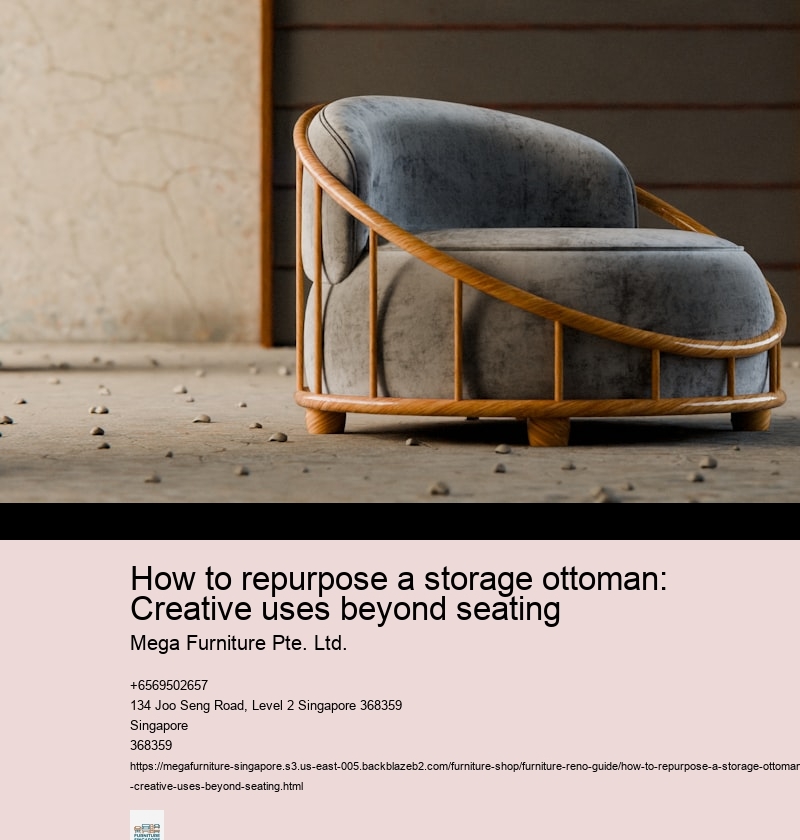
How to repurpose a storage ottoman: Creative uses beyond seating

HDB BTO vs Condo Ottoman Needs

The humidity in unrenovated HDB bedrooms eats cheap plywood ottomans alive within two monsoons—yet condo dwellers prioritise aesthetics over durability, opting for bouclé or velvet pieces that stain the moment someone sets down a kopi peng. Storage ottomans in BTO master bedrooms pull double duty as makeshift luggage stands (because where else does the suitcase go in 12 sqm?), while condo living room versions masquerade as coffee tables until guests arrive.

HDB buyers lean toward rubberwood frames and Crypton fabric—materials that won’t warp when the aircon’s off for three weeks straight. Condo ottomans? They’re more likely to prioritise slim profiles (under 45cm depth) to tuck under console tables in open-concept layouts. The difference shows in the hinges: BTO units get heavy-duty metal ones, while condo versions often sacrifice sturdiness for silent-close mechanisms.

A 90cm-wide ottoman fits at the foot of most HDB beds, but condos demand modularity—smaller cubes that rearrange around sectional sofas. An ottoman is one of the most under-rated pieces in a small Singapore living room — extra seating when guests come over, footrest during the daily wind-down, sometimes a coffee-table substitute when the room layout demands flexibility. Megafurniture's Ottoman collection covers footrest, square, lift-top storage, and round designs in fabric, leather, faux leather, velvet, and rattan. Lift-top storage variants typically hold 60–80 litres of contents — useful for blankets, board games, or seasonal items.. And let’s be honest: the average Tampines flat needs wipeable surfaces, not the linen upholstery that looks pristine in Robertson Quay showrooms.

Megafurniture’s storage ottomans solve for both—think lift-top designs with hidden compartments for spare bedsheets, or bench-style units that slide under bay windows. The real test? Whether it survives being used as a step stool to reach the top shelf of a BTO wardrobe.
Humidity-Resistant Materials Guide

Singapore’s humidity warps untreated wood within months — that teak coffee table from the pasar malam will start wobbling by year’s end. For ottomans, stick to polypropylene weave or treated teak; the former shrugs off spilled drinks, while the latter develops a silvery patina that actually looks better with age.

Fabric choices matter more than you’d think. Performance linens might survive your toddler’s juice box, but only Crypton or Sunbrella upholstery stands a chance against teh tarik stains in a 4-room BTO where the ottoman doubles as impromptu dining seating. Some showrooms let you test samples — pressing a wet cloth against swatches reveals which fabrics leave watermarks versus beading up properly.

The worst offenders are particleboard bases with veneer finishes. They’ll swell at the joints first, usually near the lift-up hinge where condensation gathers unnoticed. Go for powder-coated metal legs or solid rubberwood frames if you’re set on wood; they cost 15–20% more but won’t disintegrate during the next monsoon season.

Megafurniture’s Joo Seng showroom keeps a humidity chamber for stress-testing materials — useful when you need to visualise how that bouclé fabric might fare after three years of East Coast Park-level salt air. Their treated teak options age like the deck chairs at Sentosa’s old Shangri-La: unevenly, but with character.

Storage ottomans in bedrooms often get repurposed as laundry hampers, which means damp towels piled directly on the lid. That’s where marine-grade vinyl outperforms leather every time — no worrying about mildew rings when someone tosses a half-dry swimsuit inside.

Pet Owners’ Ottoman Checklist

Fabric Choices

Leather-look PU outperforms velvet when claws and drool enter the equation. Tight-weave polyester resists snags better than linen but lacks the plush feel pet owners often crave. Test swatches with actual pet hair before committing—what brushes off one fabric embeds permanently in another. Darker tones mask stains but show shedding more; mid-tone greys strike the best balance. Performance fabrics like Crypton add stain resistance without the clinical look of vinyl.

Corner Protection

Ottoman corners take the brunt of zoomies and territorial scratching. Rounded edges reduce damage while squared-off designs invite destruction. Metal corner caps work for industrial styles but clash with softer decors. Some owners wrap corners in sisal rope as a sacrificial scratching surface. For fabric ottomans, double-stitched seams add months to their lifespan.

Storage Security

Lift-top mechanisms must withstand paws prying them open at 3am. Magnetic closures work better than simple friction lids for curious cats. Avoid ottomans with gap-prone designs where claws can get trapped. Heavy lids need gas struts—households with arthritic pets should test ease of opening. Interior compartments benefit from washable liners for accidental hairball incidents.

Weight Distribution

Small dogs treat ottomans as launch pads for sofa access. Base-heavy designs prevent tipping when 8kg terriers make airborne leaps. Wider footprints (60cm+) stabilise better than narrow cubes during play. Lightweight options get shoved around during tug-of-war games. For homes with multiple pets, consider anchoring furniture to walls regardless.

Odour Control

Pet smells linger in upholstery foam longer than owners realise. Removable cushion covers are essential for monthly deep cleaning. Some opt for antimicrobial foam cores despite the 20-30% price premium. Baking soda between the cushion and cover helps between washes. Avoid ottomans with non-removable linings—they become permanent scent reservoirs.

Hidden Toy Storage

Transform your storage ottoman into a discreet playroom organizer. The spacious interior can hold stuffed animals, building blocks, or art supplies, keeping clutter out of sight. Use fabric bins inside to categorize smaller toys for easy access.

Pet Bed Alternative

Line the ottoman with a soft blanket to create a cozy nook for pets. The sturdy structure provides support while the lid keeps fur contained. Ensure the interior is well-ventilated for pet safety.

Travel Gear Hub

Store passports, adapters, and travel-sized toiletries in the ottoman for quick pre-trip access. The compact size makes it ideal for keeping essentials in one spot. Add a luggage tag to the handle for a personalized touch.

Indoor Plant Stand

Place potted plants on top of a weatherproof-lined ottoman for a mobile garden display. The storage space underneath can hold gardening tools or spare pots. Choose lightweight plants to avoid straining the lid.

Storage Ottoman as Study Desk

The 40cm height of a standard storage ottoman aligns perfectly with most study chairs when repurposed as a laptop stand—just high enough to keep screens at eye level, low enough to tuck knees beneath. In 9 sqm study nooks common to older HDB flats, this turns wasted floor space into functional surface area; the hard-top variants withstand daily laptop heat better than cushioned models, though they’ll need a silicone pad to prevent sliding.

Measure thigh clearance before committing—some ottoman depths (45–50cm) leave barely 10cm between seat edge and table, forcing awkward leg angles during long work sessions. Look for models with recessed hinges or drop-front openings if you’ll be accessing stationery frequently; piano hinges snag trousers when standing.

Megafurniture’s Joo Seng showroom displays a teak-framed version with cork-lined storage that dampens rattling cutlery—handy for those using it as a makeshift breakfast tray in studio apartments. The 38cm height works better for cross-legged floor seating than typical 42cm dining chairs, though the lacquered surface shows fingerprints.

One Tampines homeowner wedged theirs between a bookshelf and balcony door, creating an L-shaped workspace that folds away when guests arrive. The trick? Choosing an ottoman 5cm narrower than the shelf depth to avoid toe stubs.

Velvet upholstery attracts pencil shavings but wipes cleaner than linen in humid study corners. Go for darker hues if your study doubles as a snack zone—coffee stains blend into charcoal greys better than beige.

Megafurniture Showroom Advantages

The Joo Seng showroom’s 18 ottoman configurations reveal what online photos can’t: hinge mechanisms that won’t sag after 50kg of textbooks, or how storage dividers actually handle folded blankets. Test the weight capacity yourself — some models hold a child standing on tiptoes to reach ceiling fans, others barely tolerate a week’s worth of Straits Times. Storage ottomans here get opened and closed 40 times daily by shoppers; the ones in your 4-room BTO will survive three moves before the hinges start protesting. Megafurniture’s floor models show where corners get cut — literally. Cheaper ottomans use single-ply cardboard dividers that collapse under winter wear (yes, Singaporeans own puff jackets). Their mid-range options reinforce corners with steel brackets, visible when you lift the liner. The priciest ones hide full plywood panels under upholstery, adding enough rigidity to double as impromptu step stools during Deepavali lightbulb changes. You’ll notice the vinyl vs. linen debate resolves itself when testing stains. A sales assistant will demonstrate how coffee wipes off performance fabrics, then point out the same spill would seep into untreated cotton within seconds. Their Somnuz® mattress line’s stain-resistant technology trickles down to certain ottoman fabrics — useful for homes where curry stains are a weekly occurrence. Dimensions matter more than you’d think. That 90cm square ottoman looks modest online, but in a 12 sqm HDB common bedroom, it becomes the dominant surface. The showroom lets you push configurations against mock-up walls to visualise walkways. One couple realised their preferred model would block the aircon remote’s signal; they left with a narrower design that cost $200 less. The best test? Sit on it for 15 minutes while pretending to watch Channel 8. If the cushion flattens to pancake thickness by the second commercial break, keep looking. Storage ottomans should outlast your lease — and your toddler’s jumping phase.

Browse the weight-rated options

after checking hinge smoothness in person. Nothing reveals quality like a showroom model that’s survived five years of Singaporeans testing its limits.

Delivery in Narrow HDB Corridors

Narrow HDB corridors turn furniture deliveries into tactical operations. That 78cm doorframe clearance isn’t just a number — it’s the difference between your new ottoman gliding in or getting wedged sideways while neighbours peek through their gates. Megafurniture’s Jurong West team knows this drill; their pre-delivery corridor assessments spot trouble before movers arrive, measuring lift dimensions and awkward right-angle turns common in 1990s blocks.

Most storage ottomans under 60cm width clear HDB doors easily, but the real test comes after entry. That 4-room flat’s 1.2m hallway shrinks to 80cm when shoes, strollers and folded laundry claim their territory. Homeowners often forget to account for the ottoman’s lifted lid — a 90-degree hinge needs another 30cm clearance minimum.

The best units for tight spaces have recessed handles and rounded corners. One Tampines family we spoke to uses their 45cm square ottoman as a step stool to reach high shelves, then flips it for toy storage — all without scraping doorframes. For BTO flats with narrower corridors, Megafurniture’s team recommends measuring during daylight hours when stacked boxes or bicycles might temporarily eat into your clearance.

Some opt for modular ottomans that ship disassembled, though that means sacrificing the weight capacity of solid rubberwood frames. A Pasir Ris couple swears by their two-piece design: “We carried it up the stairs ourselves during the evening peak lift queue.” Their only regret? Not checking if the assembled unit would fit through their bomb shelter’s 65cm opening.

Megafurniture’s showrooms display corridor mockups with actual HDB doorframe replicas — you’ll find their ottoman collection sized for Singapore’s spatial realities. Their movers know to remove shoes before entering, a small courtesy that prevents scuff marks on freshly painted walls.

" width="100%" height="480">How to repurpose a storage ottoman: Creative uses beyond seating

FAQ: Ottoman Weight Limits

The weight limit question comes up every time—someone’s auntie perches on an ottoman during CNY, then panics when the cushion dips. Most rectangular models over 90cm handle adult seating just fine, but anything under 70cm wide is strictly for feet or kids.

Can adults sit? Yes, if you’ve got at least 120cm width—that’s the sweet spot where the plywood base won’t bow under 80–100kg. Smaller cubes (the 40–60cm ones popular in Tampines HDBs) sag within months if used as impromptu stools.

Storage for a folded queen duvet? Only the 80L+ models, and even then, it’s a tight roll. Most buyers overestimate capacity; a 60L ottoman fits two throw blankets or a stack of magazines, not bulkier linens.

Replace a coffee table? Possible, but add a tempered glass top—the 8mm ones from neighbourhood hardware shops work. Without it, condensation rings from iced teh tarik seep into the fabric within weeks. The real test is whether your living room can handle the knee-knock radius; in many 4-room BTO layouts, a 90cm ottoman leaves just 50cm clearance to walk past.

Megafurniture’s Joo Seng showroom has a stress-test unit where you can check the plywood thickness—worth a visit if you’re eyeing models under $400. Cheaper ones often use particleboard that splits along the hinges after a year of heavy use.